

Awake at 3 a.m.
again?
Start understanding what you're experiencing.
A clearer picture of your experience
Unpause brings together what you record, what you notice and what you want to understand, so you can see more than you can from a single day.
Track what matters to you
Record sleep, symptoms, mood, energy and other experiences that matter to you.
Understand your own patterns
As your record grows, see changes and comparisons based on your own history, not a generic average.
Explore what may be worth trying
Get relevant wellness information, activities and ideas based on what you're experiencing and what you want to work on.
Ask Unpause along the way
Have a question about something you recorded or something you're reading? Ask Unpause and explore it using your personal context and trusted information.
Ask UnpauseKeep your information with you
Your information is yours. Download your records when you need them.
One day is a moment. A record can show you what is changing.
What you experience can change from day to day. Tracking over time makes those changes easier to notice and understand.
Small changes are easy to miss
Sleep, energy, mood and symptoms can shift slowly. Recording them as you go helps you see changes that are difficult to remember later.
Look at more than one thing
Sleep, mood, energy and symptoms don't always happen in isolation. Seeing them together can help you understand your own experience more clearly.
See what actually happened
After weeks or months, it's difficult to remember exactly how things were. Your record gives you something concrete to look back on and, when useful, share with a healthcare professional.
Start with what you're noticing.
You don't have to figure everything out today. Start recording what matters to you, and let the picture build over time.
Five check-ins to start building your personal picture.
A couple of minutes a day. Each check-in adds to a record that is yours to look back on.
Two reminders keep it going and you set both of them: a morning nudge about the night before, and an evening one before bed. Turn either off whenever you like.
Start tonightToday
Start your first check-in.
After a few check-ins
Begin seeing comparisons and early observations.
Around your baseline
Unpause can start building a clearer picture of your usual experience.
Each week
See what you've recorded and what has changed.
Have something useful to take to your appointment.
Bring a clear summary of what you've recorded, so you don't have to rely only on memory.
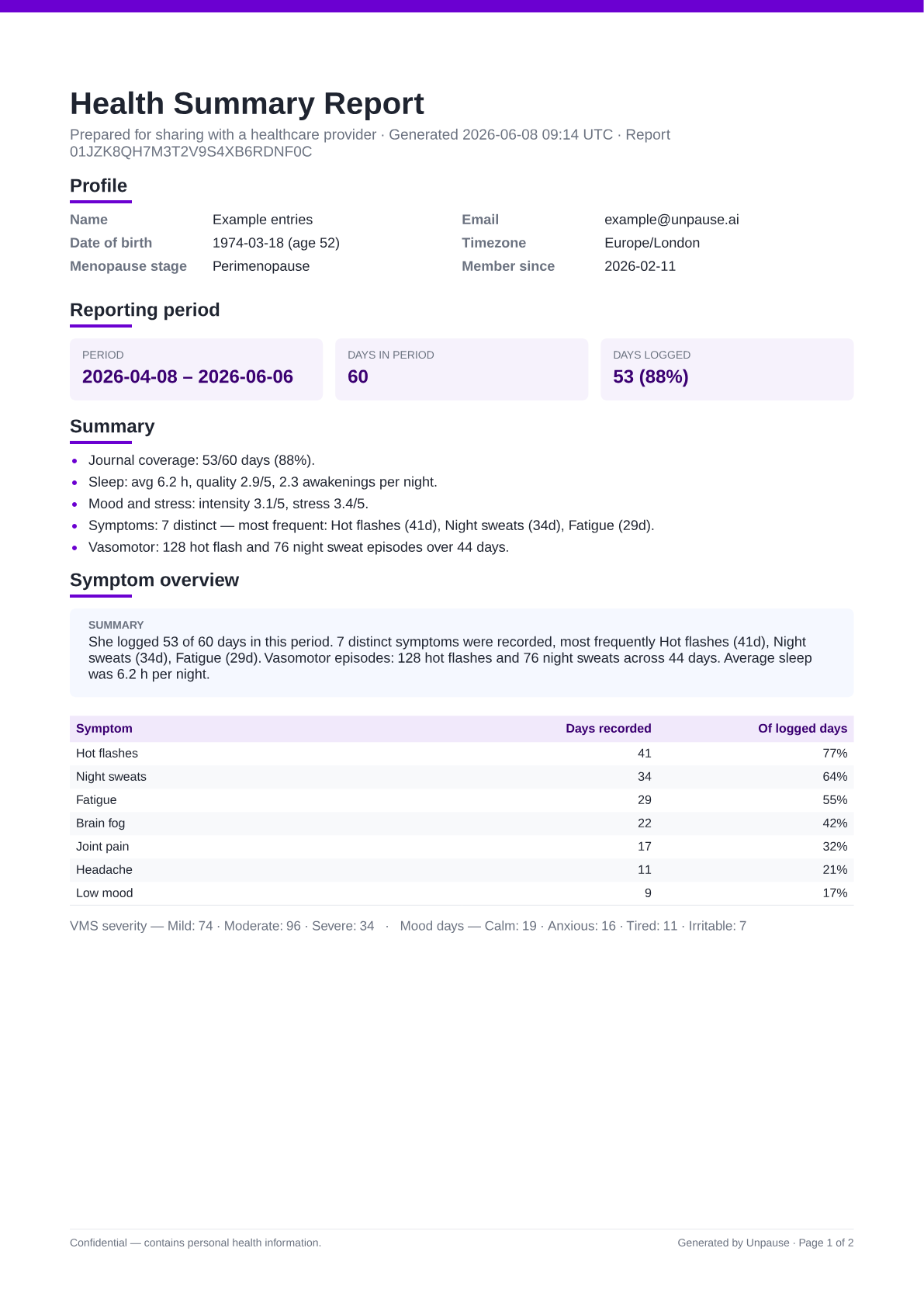
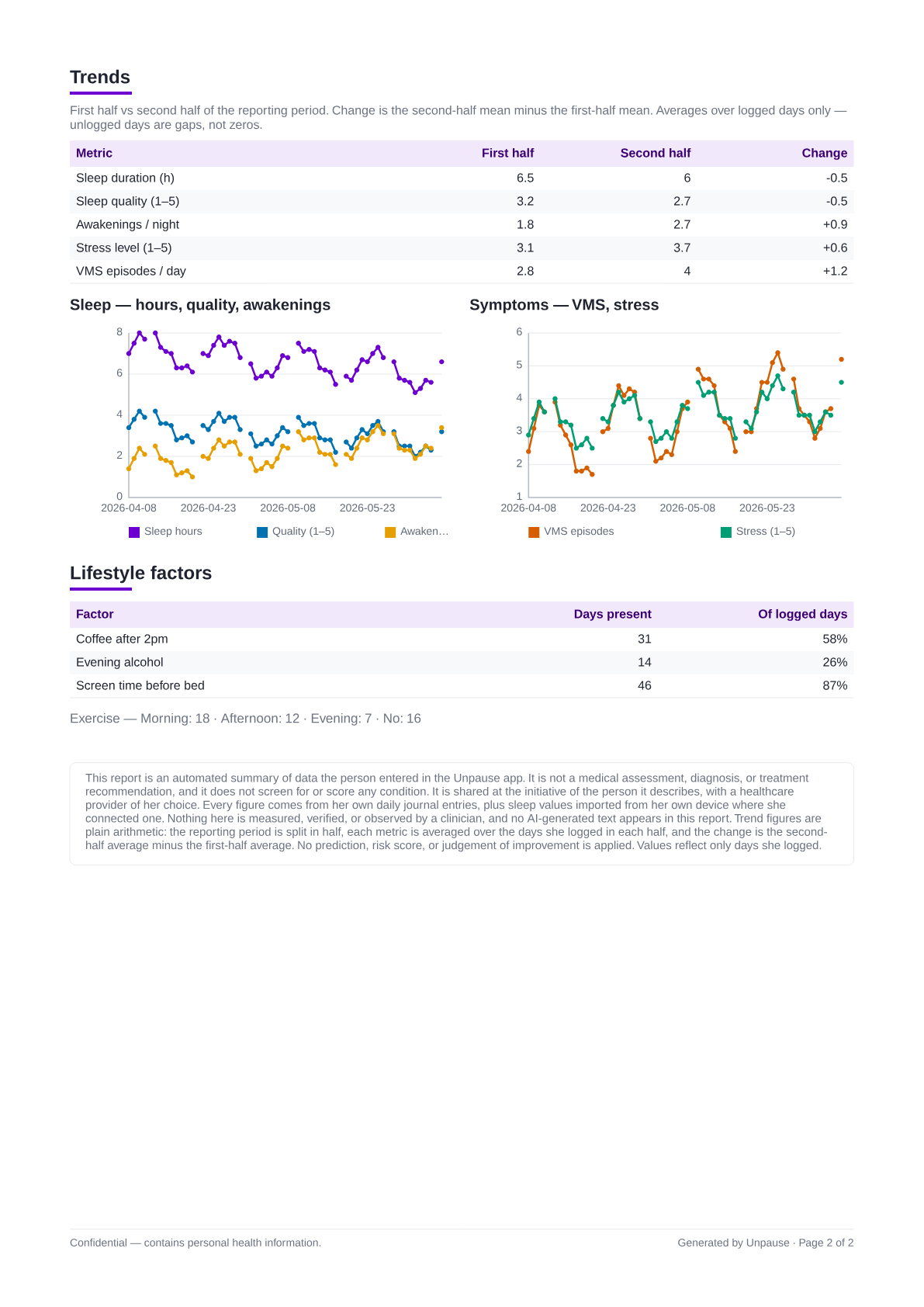
A real export, made from example entries. Hover either page to bring it forward.
Your information. Your choices.
The short version of how Unpause treats what you record.
Privacy
How your personal information is handled is set out plainly in our Privacy Policy. We never sell it and never use it for advertising.
Your data
Download a copy of your records, or delete your account and its data, any time in the app.
Wellness, not diagnosis
Unpause organises what you report. It does not diagnose, prescribe or decide your treatment.
Trusted information
Articles are reviewed before they are published, and the assistant answers from reviewed content.
Safety
If something you write suggests you may be in crisis, the app shows support and crisis resources straight away.
Control
You decide what you track, what you share, and with whom.